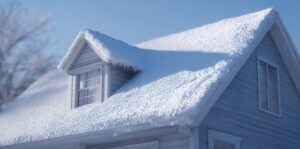
How much snow can a roof hold? A sound, well-built roof in Central Illinois can usually carry around 20 pounds per square foot of snow, which works out to roughly 3 to 4 feet of fresh, fluffy snow but only about a foot or two of heavy, packed snow. The real answer depends less on how deep the snow looks and more on how wet it is, how long it has been sitting there, and the condition of the roof underneath it.
Most winters here never come close to those limits. But a heavy wet snowfall followed by freezing rain, or several storms stacking up without a thaw in between, can change the math quickly. Below, we break down how much snow weighs by type, how to estimate the load on your own roof, the warning signs that a roof is struggling, and when it makes sense to call for help instead of waiting for the next warm day.
Key Takeaways
- Snow depth alone is misleading. A foot of fresh powder may weigh about 5 pounds per square foot, while a foot of packed or wet snow can weigh three or four times that.
- Many homes are designed to carry roughly 20 pounds per square foot of snow, but age, framing, past damage, and drifting all lower the real margin.
- Sagging ceilings, new cracks in drywall, creaking or popping sounds, and doors that suddenly stick are signs of overload and call for immediate action.
- Never climb onto a snow-covered roof. Use a plastic roof rake from the ground or call a professional for safe snow removal.
How much does snow weigh?
Snow is mostly air when it first falls, and it gets heavier as it settles, melts, and refreezes. That is why two roofs with the same depth of snow can be carrying very different loads. A quick way to understand how much snow weighs is to think in terms of the water locked inside it, since one inch of water spread across one square foot weighs a little over 5 pounds.
Here are the common rules of thumb roofers and building professionals use:
- Fresh, dry snow: About 10 to 12 inches holds roughly the same water as 1 inch of rain, or about 5 pounds per square foot.
- Settled or packed snow: About 3 to 5 inches of older, compacted snow equals roughly 5 pounds per square foot, so a foot of it can weigh 12 to 20 pounds.
- Wet, heavy snow: The kind of snow that sticks to everything and is perfect for snowmen can weigh 15 to 20 pounds per square foot per foot of depth.
- Ice: One inch of ice weighs about as much as a foot of fresh snow, close to 5 pounds per square foot.
Those numbers add up fast. Picture a typical 1,800 square foot roof covered in a foot of packed snow. At around 15 pounds per square foot, that is roughly 27,000 pounds, more than 13 tons, resting on your rafters.
How much snow can a roof hold in Central Illinois?
For most homes, the answer comes down to the snow load the roof was framed to handle. Building codes set a design snow load for each region, and Central Illinois homes are generally built for somewhere in the neighborhood of 20 pounds per square foot. Newer homes built to current code often have more cushion than that. Older farmhouses, additions, porches, and garages built decades ago may have less.
Using that 20 pound benchmark, here is a rough picture of how much snow on roof surfaces it takes to reach the limit:
- About 3 to 4 feet of fresh, dry snow
- About 1 to 1.5 feet of packed or settled snow
- About 1 foot of wet, heavy snow
- A few inches of ice combined with a foot or two of snow
Snowfall here varies a lot from one winter to the next. The National Weather Service office in Lincoln, IL posts winter storm forecasts and local snowfall reports for our region, and it is the best place to check how much snow is actually headed for Springfield, Effingham, Mattoon, and the towns in between before a storm arrives. If a big system is forecast to drop wet snow on top of what is already sitting on your roof, that is the moment to start paying attention.
How much weight can a roof hold before it is in trouble?
The honest answer is that the number on paper and the number your roof can safely carry today are not always the same. When people ask how much weight can a roof hold, they usually picture a brand new structure in perfect condition. Real roofs carry years of wear, and a few factors can cut into the safety margin:
- Age and framing: Older rafters may be undersized by modern standards, and wood that has been exposed to leaks or attic moisture can lose strength over time.
- Past damage: Rotted decking, cracked trusses, or a prior repair that was never done right all reduce how much load the structure can take.
- Roof shape: Low-slope sections, valleys, and areas below a taller roofline collect drifting and sliding snow, so one part of the roof can carry far more than the average.
- Rain on snow: A cold rain soaks into existing snow like a sponge and can add a surprising amount of weight in a single afternoon.
- Blocked drainage: When meltwater cannot drain, it refreezes at the edges and adds concentrated weight right at the eaves.
That last point is where ice dams come in. They add weight and also push water back under your shingles. We cover how to prevent them in detail in our guide to winterizing your roof in Central Illinois, so we will keep the focus here on overall snow load.
What are the warning signs of too much snow on a roof?
Knowing how much snow a roof can hold on paper only helps so much, which is why the roof’s own behavior matters. Roofs rarely fail without warning. According to FEMA’s Snow Load Safety Guidance, overstressed wood and steel structures usually show visible signs of trouble before a failure. Watch for any of the following during or after a heavy snow:
- Ceilings that sag, bulge, or show new cracks, especially in upstairs rooms
- Popping, cracking, or creaking sounds coming from the attic or roof
- Interior doors or windows that suddenly stick or will not close
- New cracks in drywall or plaster near the ceiling line
- A roofline that looks like it dips or bows when you view it from the street
- Water stains or active leaks appearing during a snow event
If you notice any of these signs, get everyone out of that part of the house and call a professional right away. This is one situation where waiting to see what happens is the wrong choice. Our team handles roof repair for winter damage across Central Illinois, and we can help you figure out whether the structure needs immediate attention.
Should you remove snow from your roof?
Most of the time, no. A normal Central Illinois snowfall on a healthy, steep roof will either slide off or melt away within a few days. Snow removal makes sense when the load is building up storm after storm, when heavy wet snow or ice is sitting on a low-slope section, or when you are seeing any of the warning signs above.
If you do decide to clear some snow, safety comes first:
- Stay on the ground. Use a long-handled plastic roof rake and work from the eaves you can reach safely.
- Avoid metal tools, shovels, and ice picks, which can tear shingles and damage flashing.
- Leave a couple of inches of snow on the roof. Scraping down to the shingles causes more harm than good.
- Watch for falling snow and ice, and keep kids, pets, and cars clear of the drop zone.
- Keep well away from power lines, especially with any long pole.
Never climb onto a snow-covered or icy roof. Falls from roofs are a leading cause of serious winter injuries, and no amount of snow is worth that risk. For tall homes, steep pitches, or large accumulations, calling a professional is the safer move.
How can you prepare your roof before the next big snow?
The best time to handle snow load is before it arrives. A roof in good shape carries snow far better than one with hidden weak spots, and a quick check in late fall or early winter can catch problems while they are still small.
A few practical steps make a real difference:
- Schedule an inspection. Have a roofer look for soft decking, damaged shingles, and flashing issues that could get worse under weight.
- Check your attic. Look for water stains, sagging rafters, or daylight where it should not be. Good insulation and ventilation also help snow melt evenly instead of refreezing at the edges.
- Clear gutters and downspouts. Open drainage lets meltwater leave the roof instead of turning into heavy ice along the eaves.
- Trim overhanging branches. Snow-laden limbs can snap and land on the roof, adding sudden weight and damage.
If an inspection shows your roof is near the end of its life, replacing it before another winter adds real peace of mind. A properly built new roof with sound decking gives you the full design capacity your home was meant to have, and our residential roof installation process starts with a careful look at the decking and framing underneath the shingles.
Local help when the snow piles up
Whitney Roofing is a family-owned company founded by Kalen and Bailey Whitney in 2018, and we have been helping homeowners across Central Illinois get through tough winters ever since. Whether you need residential roofing in Chatham, a winter damage check in Effingham, or residential roofing in Shelbyville, we give you a straight answer about what your roof can handle and what, if anything, needs to be done.
When you call us after a big storm, we look at the roof from the ground and the attic first, check for any signs of structural stress, and explain your options in plain terms. Sometimes the right call is to clear a section of heavy snow. Sometimes it is a repair once the weather breaks. And sometimes the best news is that your roof is doing exactly what it was built to do.
Frequently Asked Questions About Roof Snow Load in Central Illinois
How much snow can a roof hold before it collapses?
Most Central Illinois homes are built to carry around 20 pounds per square foot of snow, which equals about 3 to 4 feet of fresh snow or roughly 1 to 1.5 feet of packed snow. Older homes, low-slope sections, and roofs with past damage can hold less. Watch for warning signs like sagging ceilings or sticking doors rather than relying on depth alone.
How much does a foot of snow weigh on a roof?
It depends on the type of snow. A foot of fresh, dry snow weighs about 5 pounds per square foot. A foot of packed snow can weigh 12 to 20 pounds per square foot, and a foot of wet, heavy snow can be even more. On an average-size home, that can mean many tons of weight.
Is it safe to leave snow on my roof all winter?
Usually yes, if the roof is in good condition and the snow is not building up storm after storm. Problems start when heavy wet snow, rain, or ice adds weight on top of existing snow, or when drifts pile up in valleys and low spots. If you see warning signs of stress, call a professional.
Can a metal roof hold more snow than a shingle roof?
The roofing material itself does not change how much weight the framing can carry. What changes is how snow behaves. Snow tends to slide off a metal roof more easily, so it often carries less load over time, but that sliding snow can be a hazard below. The rafters and decking underneath set the real limit.
Who should I call to remove heavy snow from my roof?
Call an experienced roofing contractor rather than climbing up yourself. A professional can judge whether removal is needed, clear snow without damaging shingles or flashing, and check for any structural stress. If you see sagging or hear cracking, leave the area and call right away.
If heavy snow has you worried about your roof this winter, schedule a free inspection with Whitney Roofing and we will tell you exactly where your roof stands.